


Understanding the Growth of B2B Ecommerce: Key Trends and Strategies

Laura
Buzin
B2B commerce used to be built on handshakes, catalogs and phone calls. Orders were placed manually, often retyped from emails or handwritten notes keyed into an ERP system. Manual processes were the norm for decades—especially throughout the 1980s and 90s, when they matched the pace and expectations of the market.
Over the past 10 to 15 years, buyer behavior has changed dramatically. Today’s B2B buyers expect speed, visibility and a tailored digital experience that manual workflows simply can’t deliver at scale. Fortunately, modern ecommerce technology makes it easier than ever to meet those demands, freeing up teams and creating a more scalable, efficient way to do business.
The growth of B2B ecommerce is accelerating as digital transformation scales, and it’s not slowing down. Today’s buyers expect the same ease and efficiency they get from personal online shopping—only with the complexity of tiered pricing, volume discounts and account-specific catalogs built into the digital commerce experience.
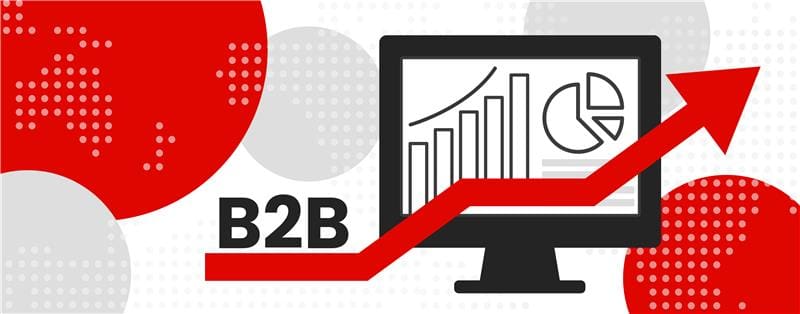
As every new B2B ecommerce industry forecast shows, digital is no longer optional—it’s quickly becoming the primary way businesses expect to buy. This steady increase in B2B ecommerce sales reflects a larger shift in how businesses prefer to purchase—digitally, efficiently and without added friction.
For companies using Microsoft Dynamics or Acumatica, this shift brings both urgency and opportunity. Customer expectations are rising, competitors are going digital, and traditional processes just can’t keep up.
To stay ahead of the curve, scale online sales and streamline operations, this article looks at where the B2B market is going, what modern buyers expect and how manufacturers and distributors can adapt their strategy to grow and deliver better customer experiences through ecommerce.
- Market Growth and Opportunity in B2B Ecommerce
- Changing Buyer Expectations in B2B Sales
- Benefits of Investing in B2B Ecommerce Capabilities
- Key Trends Driving B2B Ecommerce Growth
- Types of B2B Sellers Embracing Ecommerce
- Challenges in Adopting B2B Ecommerce
- Best Practices for B2B Ecommerce Growth
- How k-ecommerce Helps Businesses Grow
Market Growth and Opportunity in B2B Ecommerce
B2B ecommerce is no longer the exception–it’s becoming the expectation. Forrester forecasts that U.S. B2B ecommerce revenue will exceed $3 trillion by 2027, growing at a compound annual growth rate (CAGR) of 10.7% from $1.7 trillion in 2021. By then, ecommerce will account for nearly a quarter of all B2B sales in the U.S. This surge in B2B ecommerce sales growth is reshaping how businesses buy and sell every day.
Younger decision-makers are one of the main reasons for the shift. According to LinkedIn’s 2025 B2B Buyer Report, Millennials now represent 73% of all B2B buyers and account for 44% of final purchasing decisions. These digital-native buyers value speed, transparency and self-service. And they’re not afraid to spend. AAXIS Digital reports that 73% of B2B buyers are willing to place ecommerce orders over $50,000, and nearly 40% are comfortable spending $500,000 or more through online channels.
Early adopters are already seeing the upside. A solid B2B ecommerce platform lets you reach new customers, reduce the cost of sales by automating order intake, eliminating manual entry and streamlining quote-to-cash workflows. With fewer hours spent on routine transactions, sales teams can focus on relationship building and complex deals—while your business keeps pace with rising customer expectations.
Changing Buyer Expectations in B2B Sales
The data is clear, ecommerce is no longer a side channel; it’s a core revenue driver. Today’s B2B buyers expect real-time inventory, clear pricing, fast checkout and flexible payment options. 75% of B2B buyers prefer a rep-free sales experience, and Gartner reports they now spend just 17% of their purchasing journey talking with a sales rep—showing a strong preference for transparency, speed and digital self-service.
But it’s not just about the site. Buyers bounce between channels—website, email, live chat, mobile, even reps. The B2B buyer digital journey spans all of these touchpoints, and they want each step to feel connected. And increasingly, they don’t want to talk to anyone to place an order.
They want “seller-free” experiences that let them complete B2B transactions quickly and on their own terms. Millennials and Gen Z buyers expect self-service portals, mobile ordering and personalized content that reflects their purchasing history.
If your site doesn’t offer those things, they’ll move on to one that does. For manufacturers and distributors, delivering that kind of experience requires more than a website. It means connecting your ecommerce platform directly to your ERP and related systems so pricing, inventory and customer data stay accurate and in sync, keeping operations running smoothly behind the scenes.
Benefits of Investing in B2B Ecommerce Capabilities
Making ecommerce a priority isn’t just about staying current. It’s about solving real business challenges and unlocking long-term efficiencies. With the right ERP ecommerce solution, you can:
- Reach new markets without adding sales reps or opening new locations. A well-designed ecommerce platform lets your products be discovered by buyers outside your traditional territory, including new industries or international markets.
- Reduce costs by eliminating the need for manual order entry, quote generation and payment processing. Instead of burning hours on low-value transactions, teams can redirect time toward relationship-building, upselling and problem-solving.
- Build loyalty with features that make reordering simple—like saved order histories, contract-specific pricing and real-time inventory visibility. When a B2B customer can log in, find exactly what they need and place an order in minutes, they’re far more likely to return.
- Get better data for planning and forecasting. When ecommerce is tied to your ERP, every transaction generates insights you can use to improve pricing, predict demand and manage fulfillment more effectively.
- Sell anytime to customers in any time zone or on any shift. With ecommerce, your business is never truly closed even on weekends or holidays.
- Scale efficiently by handling more orders with the same staff. Automated workflows reduce the need for headcount as you grow.
- Empower your sales team to focus on strategic conversations. Instead of answering basic inventory questions or taking reorders, reps can focus on building trust, uncovering new needs and closing bigger deals.
Navigloo, a Quebec-based manufacturer of watercraft shelters, offers a great example. Before partnering with k-ecommerce, they were manually reentering every online order into Acumatica—a time-consuming process that slowed fulfillment and increased the chance of human error.
With the launch of their ERP-connected site using k-ecommerce’s Sync Technology, they processed over 500 automated, error-free orders in their first month. The site went live in just 30 days and delivered full ROI in under 60, streamlining peak-season operations, giving their internal team back valuable time.
If your team is still processing orders manually, ecommerce can relieve that burden and help you work smarter—not just harder—while laying the foundation for sustainable growth.
Key Trends Driving B2B Ecommerce Growth
Several big-picture B2B ecommerce trends are shaping how businesses evolve:
- AI-Driven Personalization: AI tools are helping companies deliver more relevant experiences by analyzing purchase history, frequency and behavior patterns. The result is faster reorder paths, better product recommendations and more efficient marketing campaigns.
- Omnichannel Expectations: Buyers expect a smooth experience whether they engage on your website, through email, via a field rep or on mobile. Omnichannel strategies ensure the buyer doesn’t have to repeat themselves or wait for information to sync across channels.
- Robust Customer Portals: More companies are investing in secure, account-specific portals where customers can log in to view personalized pricing, order status, invoices and product availability—all in real time. This reduces customer service burden and boosts satisfaction.
- AR Capabilities: For businesses that sell high-ticket or complex products—like heavy equipment, medical devices or construction materials—augmented reality allows buyers to visualize dimensions, configurations or view use-cases before making a commitment.
- Blockchain Transparency: Though still emerging, blockchain is gaining traction for tracking provenance, shipment status and compliance certifications—helping build trust in industries like pharmaceuticals, food and industrial manufacturing.
- Conversational Commerce: Whether through live chat or AI-powered bots, more businesses are enabling buyers to ask questions, request quotes or even place orders without navigating a traditional product catalog.
- Sustainability Demands: Buyers are asking for environmental accountability—requesting information on sourcing, emissions and packaging. Companies that can highlight eco-friendly practices and transparent supply chains stand to win business.
What unites all of these trends is the focus on efficiency and customer control. These tools aren’t futuristic anymore. They’re a direct result of the ongoing digital transformation in B2B commerce and are becoming standard offerings. Manufacturers and distributors who adopt them aren’t latest trends in B2B ecommerce —they’re responding to real, growing buyer expectations to stay competitive.
Types of B2B Sellers Embracing Ecommerce
B2B companies of all sizes and stages—from startups to long-established manufacturers—are embracing ecommerce through a variety of approaches:
- Legacy sellers modernizing by shifting orders from email and phone to online portals. Take a medical supplies wholesaler that once relied on faxes and phone reps—instead of rekeying each order manually, they now use a secure portal integrated with their ERP to handle thousands of transactions automatically each month.
- Blended models using password-protected B2B storefronts alongside public ecommerce. This approach allows businesses to maintain direct-to-consumer visibility while offering exclusive pricing, terms and catalogs for existing B2B buyers.
- Fully integrated platforms that pull pricing, inventory and terms directly from ERP systems. These systems are ideal for complex workflows with negotiated contracts, volume discounts and net terms. By linking ecommerce directly with Acumatica or Microsoft Dynamics, businesses avoid manual updates and keep data consistent.
- Appealing to younger buyers with mobile-ready ecommerce websites, self-service options and a modern user experience. These buyers don’t want to make a call to reorder—they want to log in, see their past orders and check out in a few clicks.
- Using data to improve marketing campaigns, product mix and customer service. A construction materials distributor, for example, can identify which SKUs are frequently bundled together and build targeted promotions or upsell offers based on real purchasing behavior.
Whether you’re selling medical supplies, construction hardware or ag equipment, B2B buyers expect online options—and businesses offering them are growing faster because of it. Embracing ecommerce isn’t about fitting into a mold; it’s about meeting your customers where they are and offering the buying experience they expect.
Challenges in Adopting B2B Ecommerce
As B2B ecommerce adoption trends continue to accelerate across industries, many manufacturers and distributors are still navigating the challenges that come with going digital for the first time—or modernizing outdated systems:
Legacy tech: Older ERP, CRM or inventory systems often lack the APIs or architecture to integrate with modern ecommerce platforms. This leads to siloed data, duplicate entries and order delays.
k-ecommerce addresses this by offering native, bidirectional integration with Microsoft Dynamics and Acumatica, eliminating the need for manual syncing or custom API development.
Complex pricing models: Unlike B2C, B2B pricing can vary widely by customer, order volume, contract terms or payment method. Generic ecommerce tools rarely support this complexity out of the box.
With k-ecommerce, your customer-specific pricing, terms and volume discounts live inside your ERP and sync automatically with your storefront.
Data quality problems: Inconsistent product descriptions, outdated images or inaccurate inventory data undermine the experience. Even small data issues can frustrate buyers and lead to order errors.
k-ecommerce pulls product and inventory data directly from your ERP to maintain a single source of truth across platforms.
Organizational resistance: Sales teams may worry ecommerce will cannibalize their role or diminish customer relationships. IT teams may feel stretched thin. Change management becomes critical.
By offloading low-value tasks like order entry and routine quoting, k-ecommerce actually frees sales teams to focus on high-touch, high-value opportunities.
Customer learning curves: Even if your platform is easy to use, some long-term buyers are used to emailing or calling in orders. They’ll need onboarding, demos or even sales support to make the shift.
k-ecommerce provides customizable self-service portals with familiar account layouts and order history, making the transition easier for both new and legacy buyers.
Upfront costs and resources: Building a polished, ERP-connected, mobile-friendly site requires investment. But skipping corners here usually results in low adoption and more manual work in the long run.
k-ecommerce’s modular platform, fixed pricing and rapid implementation options make it easier to launch quickly without compromising functionality.
Dietzgen, a distributor of wide-format printing materials, is a strong example of how k-ecommerce helps solve common operational challenges. With thousands of SKUs spread across multiple sources, from ERP systems to PDFs and email attachments, their team struggled with consistency and speed.
After adopting k-ecommerce with a direct integration to Microsoft Dynamics GP, Dietzgen centralized product data and gave customers real-time access to accurate information. This led to faster sales cycles, smoother product launches and significantly improved customer experience—all while reducing strain on internal operations.
Many businesses succeed by starting small—focusing on a high-volume product line, a select group of customers or a phased rollout. k-ecommerce supports this approach with a modular platform design that lets you add features over time, rapid implementation options that deliver value fast without overcommitting resources and ERP-first integration that ensures your ecommerce site aligns with your backend systems from day one.
When you prove success in one area, it’s easier to build internal momentum and take the next steps toward scaling B2B ecommerce operations.
Best Practices for B2B Ecommerce Growth
To grow efficiently, B2B companies need a solid foundation and a well-defined ecommerce strategy for B2B companies that addresses both customer experience and internal workflows. Focus on these best practices for optimizing B2B ecommerce experience and ensuring long-term success:
- Sync with your ERP to avoid data issues and double entry
- Build customer portals with account-specific features that buyers actually use
- Design for usability, not just aesthetics—make it easy to navigate, search and reorder
- Use your data to guide decisions on marketing, inventory and product development
- Think omnichannel so online, reps and service teams all work from the same playbook
- Roll out in phases to minimize risk and maximize learning
- Train your team and your customers so adoption sticks
- Partner with experts who understand your tech stack and your industry
If you’re looking to evaluate where your ecommerce strategy stands—or where it could go next—k-ecommerce can help you assess your current systems, identify gaps and build a plan that aligns with your ERP and business goals. Or explore actionable insights on the best practices in B2B ecommerce to better understand proven strategies used by companies like yours to get started.
How k-ecommerce Helps Businesses Grow
The shift to digital is no longer a question of if—but when. B2B buyers expect faster, easier online experiences, and businesses that deliver them are winning more deals with less friction. If your team is still buried in manual order entry, disconnected systems or slow fulfillment processes, now is the time to modernize.
At k-ecommerce, we help manufacturers and distributors streamline operations with ERP-integrated ecommerce and payment tools tailored for Microsoft Dynamics and Acumatica users. Whether you need to launch your first customer portal or upgrade a legacy storefront, our platform connects ecommerce with the systems that already run your business.
You’ll reduce internal workload, improve order accuracy and empower your customers with 24/7 access to personalized shopping, real-time inventory and secure checkout through our ERP-integrated payment solution.
If you’re ready to grow digital sales, deliver better service and get more value from your ERP, we’re here to help. Start with a demo of k-ecommerce and explore what’s possible when your ecommerce works as hard as you do.